Tuesday, December 12, 2006

Surgery 34


Kilo - Kilo (Onitor)
Bj Nilsen/Chris Watson - Storm (Touch)
Oren Ambarchi - Suspension (Touch)
Hecker - Recordings for Rephlex (Rephlex)
Rosy Parlane - Jessamine (Touch)
BAJA - Maps/Systemalheur (Stilll)
Janek Schaefer - In The Last Hour (Room40)
Charlemagne Palestine/Tony Conrad - An Aural Symbiotic Mystery (Sub Rosa)
KTL - KTL (Mego)
Xela - For Frosty Mornings and Summer Nights (Type)

Track Listing

Kilo - I've Seen You At The Supermarket
Bj Nilsen/Chris Watson - SIGWX (excerpt)
Oren Ambarchi - This Evening So Soon
Hecker - Acid 245; Ph.Inv 9T2
Rosy Parlane - Part One (excerpt)
BAJA - Breakfast With Hostages
Janek Schaefer - Between The Two
Charlemagne Palestine/Tony Conrad - An Aural Symbiotic Mystery (excerpt)
KTL - Forest Floor 4
Xela - An Abandoned Robot

Listen to Surgery 34 click here

Tuesday, November 21, 2006

Surgery 33


To Rococo Rot - Taken from Vinyl (Staubgold)
Geir Jenssen - Cho Oyu 8201m: Field Recordings From Tibet (Ash International)
Christopher Willits - Surf Boundaries (Ghostly International)
Dollboy - Casual Nudism (Arable)
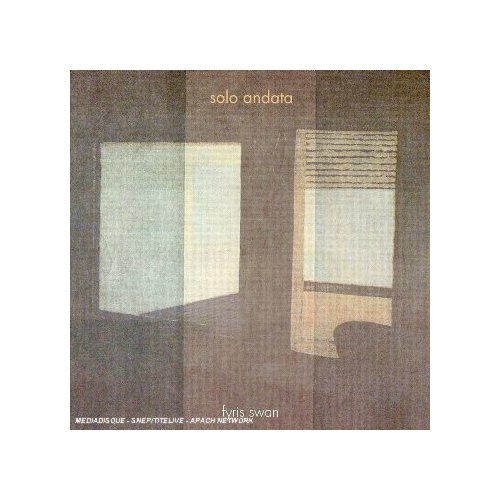
Solo Andata - Fyris Swan (Hefty)
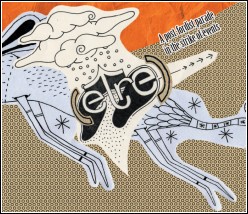
[etre] - A Post-Fordist Parade in the Strike of Events (Baskaru)
Various - Thankful (Temporary Residence)
Jan Jelinek - Tierbeobachtungen (~Scape)
Conjoint - A Few Empty Chairs (Büro)
The London Sinfonietta - Warp Works & Twentieth Century Masters (Warp)
Various - Project Bicycle (Ache)
Rauhan Orkessteri & Lauhkeat Lampaat - Sylissain Oot (Ache)
Scott Solter - Canonic (Hometapes)

Track Listing

To Rococo Rot - Days between stations
Geir Jenssen - Camp 1.5: Mountain Upon Mountain
Christopher Willits - Colors Shifting
Dollboy - Pauline's Shades
Solo Andata - Coastal Road Thoughts
[etre] - Dogs From My Childhood: Multiple White
Eluvium - Carousel
Jan Jelinek - Happening Tone
Conjoint - Conjoint With Clarity
London Sinfonietta - Aphex Twin Prepared Piano Piece 2
Tu M' - Ladri Di Biciclette
Rauhan Orkessteri & Lauhkeat Lampaat - Bile-Kalkkuna
Scott Solter - Witkin Dub

Listen to Surgery 33 click here

Monday, November 20, 2006

Steffen Basho-Junghans – Late Summer Morning

On 2004 album 7 Books, also on Strange Attractors, Basho-Junghans explored a more aggressive and diffident approach to his steel string acoustic guitar play. This album turns a gentler cheek back to a pastoral mode of 2003’s Rivers and Bridges. The long title track that opens the album wanders and tentatively contemplates trills and echoes before gradually giving over to an ecstasy of vibrating overtones that verges on airborne. Likewise, “Woodland Orchestra” collects a veritable hive of zings and stings. Often compared to John Fahey, this album eschews that master’s blues bending and terse changes for a more straightforward and expletive-free vocabulary. The brightest end of the rainbow and where it lands seems to most preoccupy the musical spectrum here. The ever-forward bouncing chords, played without pause, risks slight muscular strain on necks from head bobbing and ankles from toe tapping, but it’s a risk most will like take without qualm.

Strange Attractors

Janek Schaefer – In the Last Hour

Finding titles for its four tracks from a sentence in the novel The Bridge by Iain Banks, this hour long live performance by Schaefer is nothing short of stunning. Commissioned by and performed at U.K.’s Huddersfield Contemporary Music Festival in November of 2005, the work was conceived for an eight speaker system in the majestic, domed Town Hall. Schaefer, who is primarily known for his forward-looking turntable work, here expands instrumentation to include chord organ, piano, clarinet, location recordings and the hall’s own native organ. Schaefer claims to have gather the source sounds over a period of three years in preparation for a piece to suit Banks’ line, “In the last hour, between the two, half submerged by each, the ruined city.” Opening with repeated slow organ swells and the sinister sounds of digging, the performance progress through a chart of sacred and profane devotions. The slow changes, from organ drone to hints of forest life to distant human noises all rising combing and receding are so gradually immersive that it borders on hypnotic. From within this altered listening state seemingly benign and moderate themes gain an unexpected emotional charge. Without a firm didactic hand Schaefer still guides the experience like a hushed sound tour of a slightly darkened and water-warped English hamlet. To hear it from recorded distance is breathtaking, to have been present for the performance was doubtlessly sublime.

Room40

Solo Andata – Fyris Swan

Long distance relationships seldom work. Seldom, but not never. Solo Andata is a collaboration between guitarist Kane Ilkin and laptop artist Paul Fiacco. The two met in Perth, Australia after Ilkin moved there and began perusing the “scene.” A common interest in the work of then-rising star Scott Herren (Savath & Savalas, Prefuse 73) led them to unsuccessfully attempt emulation of his hip-hop meets table top jazz style. Fiacco eventually moved to Stockholm, Sweden and it is ironically the separation that helped the duo come together musically. Fyris Swan sounds like a meandering Sunday afternoon telephone conversation that circles half thoughts and familiar vernacular that seem faintly arcane to eavesdroppers. Ilkin’s acoustic guitar is doubled and tripled in places to knit gentle plucks and scherzo that skip from ear to ear. Fiacco pulls together drones, room sounds, concertina breaths and static in kinetic but fairly spacious mixes. The slowed nature of the file sharing process allows a much more deliberate and contemplative placing of ideas and layers, though they avoid any sterility this might incur. If the best moments of The Books were decaffeinated you would have Solo Andata.

Hefty

(Etre) – A Post-Fordist Parade in the Strike of Events

The acceleration of panic rushing from room to room as you frantically search for the microwave that’s melting down, the television shooting sparks, the light bulb sizzling its incandescent death knell… that’s what opens Salvatore Borrelli’s new work as (Etre). A certain strain of Italian audio art seems to suffer/benefit from a Futurism hangover. It proposes a machine-generative music set in motion then left unguided by human hands. A language of modem chirps and distorted voices issued from wax cylinders mixed with errant snatches of radio broadcast and spent mainspring percussion. The pieces also relate to Borrelli’s performance background that often involves real time manipulations and amplification of seemingly silent rooms or common objects and elements such as fire, ice, glass, chemicals. “Real” instruments become the less-than-simple machines that unexpectedly drift into the noisy fray. Borrelli guides us into the gyre of this tornado and lets the wind do its work.

Baskaru

Shedding – What God Doesn’t Bless...

Having made little ripples with post-rock group Parlour (Temporary Residence), Connor Bell eventually stepped out of the shallow water and into the deep end of solo work as Shedding. What God Doesn’t Bless… is his second release and it’s a quiet, seeking and delicate work stretched over three long tracks more indebted to European lowercase jazz and electronics improv that algebraic rhythms. Bell cites Eric Dolphy as a major influence, especially the jazz clarinetist’s own abiding interest in the sound of birds and the natural world as they relate to composition. The sound of Shedding is, appropriately, an unlayering of musical strata down to the bedrock where it’s organizing principles sunder, leaving unbound sounds to trail off seeking new relationships. A more traditional framework of drums (by Joey Yates) and bass open and enclose track 2, “W,” before dropping away to leave behind an elemental drone adorned by cuckooing electronics. The album closes with a tortuous electronic threadwork that describes an arid. rolling landscape with lowing notes and the grain of air. Bell manages to effectively improvise with himself in a rich exploratory manner.

Hometapes

Scott Solter – Canonic


Strange beast this; half man/half band… new, but old… confusing, at first. The root notes come from a 2005 album called Stowaway by the band Pattern is Movement, a quartet from Philadelphia. Half of this six track e.p. reintroduces the band and the album, revealing them to be a slightly more angular and/or muscular version of dexterous rock groups like Pinback and Wooden Stars. The other half of the equation is Scott Solter, credited with “machines, grease, razor and tape.” Solter takes his toolbox to the band tracks and origamis them into a stranger folded creature. His iterations are not standard remixes, splitting whole chunks of original work off and re-ordering them, distorting them, adding noise and ghost rhythms. The closest analog would be the Faust Tapes, re-interpretations of the German bands first two albums, but this time by an outside source more eager to add a personal stamp. The new tracks are shorter, restlessly changing tempos and density, lapsing in and out of sharp focus. Solter seems as happy to obfuscate the source as throw it in sharp relief. The two halves of the whole e.p. are free standing, but wires and vines weave the structures together.

Hometapes

Donato Wharton – Body Isolations

Isolation in this case has less to do with loneliness than with closed-circuit attention to detail. Wharton’s second full length takes its title from a dancer’s exercises in communication through all parts of a whole, an idea suited to his melodically rich and systematically diverse compositions. Tracks like “Blue Skied Demon” invite investigation into the accrued corrosion of texture and reverberation of surfaces via guitar shapes. On the other hand “Transparencies” lays bare, simple guitar and piano notes next to each other and examines their subtle interplay. With “Puget Sound” and “The End of the American Century” both elements come together in simplicity of tone that wearily beckons before shaking of highway dust and telling spellbound tales. Wharton has that rare gift for enclosing melody within fragments of sound that collide and recombine within each sphere of song. Each listener enjoys unique experiences depending on their concentration. Like suddenly discovering a map’s atomic landscape through a microscope.

City Centre Offices

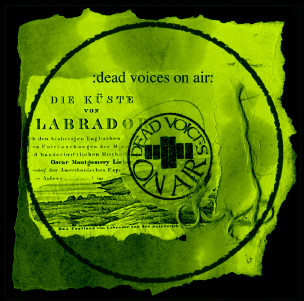
Dead Voices on Air – From Labrador to Madagascar

Mark Spybey is a veteran of the psychic wars that were the 80s and 90s industrial, post-industrial, darkwave, etc. electronic scenes. Having logged hours with latter day Zoviet France and Skinny Puppy offshoot Download, it has always been his solo DVOA project that has yielded the most interesting results. Spybey, like fellow travelers Mick Harris and Justin Broadrick, has usually managed to steer clear of most grand guignol (and cheddar-smelling) aspects of industrial music. From Labrador to Madagascar, the first DVOA since a 2001 live effort, stays the ambient course for the long-running project. Rudderless drones are spiked with bobbing metal percussion and uneasy atmospherics suggesting all manner of phobia. Title tracks “Labrador” feature a warm hand-thrumming drum circle vibe while “Madagascar” is a sky of gunmetal scraped by chrome seagulls. The latter tracks, “Papa Papa Nesh” and “Splay” lapse into a more stock version of menace and threat, turning the clock back a couple of decades. Despite that DVOA sits in an interesting pocket where its weather beaten features render it timeless. Spybey makes no attempts to retool his palette to suit any of the newly mushroomed subgenres of electronics, but new classes have admittedly strayed into the edges of his playground.

Invisible

Thursday, November 16, 2006

Svalastog – Woodwork

Tromsø, Norway… population 50000… would seem to have some native energy that powers experimental musicians. Biosphere, Alog and Röyksopp have all exported their own versions of winter-warmed electronics and are now joined by Per Henrik Svalastog. On his second solo full length he explores the traditional sounds of his remote home, using Harpeleik (Norwegian zither), Bukkehorn (ram’s horn) and Kuhorn (cow’s horn) as source instruments. Opener “the wood metal friction” introduces these sounds with a fanfare that is soon recast into a marching lope of bass pulses and seesawing strings. While Svalastog never masks or pitch shifts the original tonality, he is fairly liberal is his cutting and ordering of blocks. The tracks have a mantra-like quality, with the zither strings clipped and interlocking into regular measures and the horns blunted into bass notes. The result is the kind of microHouse you might expect in the most modern of mead halls. Ultimately Woodwork is a remarkably pure and simple synthesis of temporally discrete elements. The hills may soon be alive with laptops recording the horns of Ricola barkers and Balalaikas ringing out.

Rune Grammofon

Xela - The Dead Sea

After a stretch of remarkable releases by a disparate group of artists, Type label boss John Twells turns out his own most recent recording as Xela, his third overall. Referencing Italian horror film soundtracks and with a distant kinship to current doom and noise-laden sound merchants, Twells’ work is suggestive rather than blatantly flashing sharp knives in dark corners. He manages this way to sustain a low ebb of dread. The ramshackle clatter of percussion has a Tom Waits-in-Venice undertow, the perfect accompaniment for bobbing helpless as your ship disintegrates. Sounds and instruments often pull apart from set keys and times suggesting a band drifting apart on floating debris. The album’s narrative tension breaks for brief moments of light and hope like the acoustic jaunt of “Wet Bones” or the faux-heroic accordion parade of “Savage Rituals.” These sounds of salvation are soon drowned out by clanking chains, lonely buoy bells and “Sinking Cadavers.” Twells attention to detail verges on electroacoustic constructivism without sacrificing the musical thread, like a film’s music and sound design sliding together seamlessly. Xela’s nautical horror show is best listened to while safely landlocked.

Type Recordings

Various-Jukebox Buddha

It begins with a device so unobtrusive, so uncomplicated, so simple that it should occupy only backgrounds and peripheral space. The Buddha Machine was a limited run 8-bit electronic doohickey programmed with 9 lo-fi sound loops… a little plastic anti-iPod if you will. A year later, following effusive praise by Brian Eno, a troop of artists have taken the little Buddha as an objet d’art and the basis for 15 remarkably diverse extrapolations. ON-U Sound kingpins Sherwood and Wimbish build a crawling granular chant underwritten with in-house bass rhythms. Monolake’s Robert Henke, who has made a whole Buddha-centric album, creates looming waves of sound that threaten sudden unresolved impacts. Fonal records’ sound and film artist Es enjoys the close kinship the loops have to his own particle washes of drone. ~Scape technicians Jelinek, Pekler and Leichtmann commercialize the little box with tongues firmly planted in cheek. Sunn O))) unearth a dark little corner where AA batteries corrode and acid sears fingertips. Aki Onda, Blixa Bargeld, Alog, Sun City Girls and more unite through the possibility that Everything is Zen.

Staubgold

Wednesday, November 01, 2006

Surgery 32


Andrey Kiritchenko - True Delusion (Nexsound)
Boduf Songs - Lion Devours the Sun (Kranky)
Various - Jukebox Buddha (Staubgold)
Vedette - S/T (Stilll)
Svarte Greiner - Knive (Type)
Tod Dockstader - Aerial #3 (Sub Rosa)
A Taste of Ra - II (Häpna)
Mossa - Some Eat it Raw (Circus Company)
Tristeza - En Nuestro Desafio (Better Looking)
Reanimator - Special Powers (Community Library)
Chris Hebert - Mezzotint (Kranky)
Pan.American - For Waiting, For Chasing (Mosz)
Rafael Toral - Space (Staubgold)

Track Listing

Andrey Kiritchenko - November comes and squirrels fall in love
Boduf Songs - Please Ache for Redemptive
Es - Tietä Valojen Taa
Vedette - Seafoam Haze & Bees
Svarte Greiner - The Boat Was My Friend
Tod Dockstader - Descent
A Taste of Ra - The Fox and the Frog
Mossa - The Meat in You
Tristeza - Pildora Amargada
Reanimator - No Dancing
Chris Herbert - Chlorophyll
Pan.American - Are You Ready?
Rafael Toral - Untitled #1 (excerpt)

Listen to Surgery 32 click here

Wednesday, October 25, 2006

Surgery 31


Move D - Kunststoff (City Center Offices)
Humcrush - Hornswoggle (Rune Grammofon)
Uphill Racer - No Need To Laugh (Normoton)
Caroline - Sunrise EP (Temporary Residence)
Working For A Nuclear Free City - S/T (Melodic)
Luomo - Paper Tigers (Huume)
Part Timer -S/T (Moteer)
Jean Felix Mailloux - Aurores Boréales (Malasartes)
Mr Cooper - Amongst Strangers (Wimm)
Gianni Lenoci - Sextant (Ambiances Magnetiques)
Forrest Fang & Carl Weingarten - Invisibility (The Foundry)
Damian Nisenson - Musika (Malasartes)
Lori Freedman - 3 (Ambiances Magnetiques)

Track Listing


Move D - Soap Bubbles
Humcrush - Anamorphic Images
Uphill Racer - Tangerine
Caroline - Sunrise (Logreybeam Mix)
Working For A Nuclear Free City - The Tape
Luomo - Paper Tigers
Part Timer - Thinking, Unthinking
Jean Felix Mailloux - Densité 23,7
Mr Cooper - Two
Gianni Lenoci - Punto
Forrest Fang & Carl Weingarten - Moon & Dome
Damian Nisenson - Ojosrojos
Lori Freedman - Seven

Listen to Surgery 31 click here

Tuesday, October 03, 2006

Surgery 30


Ezekiel Honig - Scattered Practices (Microcosm)
Donato Wharton - Body Isolations (City Centre Offices)
Alexander Tucker - Furrowed Brow (ATP/R)
Svalastog - Woodwork (Rune Grammofon)
Smutny - Telehors (Normoton)
Xela - The Dead Sea (Type)
Hanno Leichtmann - Nuit Du Plomb (Karaoke Kalk)
Immune - SoundInside (Stilll)
Console - Mono (Disko B)
Paul Wirkus - Déformation Professionnelle (Staubgold)
Steffen Basho-Jughans - Late Summer Morning (Strange Attractors)
Tim Hecker - Harmony In Ultraviolet (Kranky)
Richard Jarverling - Two Times Five Lullaby (Yesternow)

Track Listing

Ezekiel Honig - Oceans And Living Rooms
Donato Wharton - Transparencies
Alexander Tucker - Saddest Summer
Svalastog - Reforestation
Smutny - Darkdesert
Xela - Wet Bones
Hanno Leichtmann - Keller
Immune - Wandering
Console - Foster Kane
Paul Wirkus - Valore Energetico
Steffen Basho-Jughans - Azure No. 3
Tim Hecker - Dungeoneering
Richard Jarverling - Heavenly Birds pt.1

Listen to Surgery 30 click here

Thursday, September 28, 2006

QuintetAvant – En Concert à la Salle des Fêtes


This compelling French group of improvisers has managed to uncover a new wrinkle in the traditional vs. modern approach to spontaneous composition. Three members of the quintet, Lionel Marchetti, Jerôme Noetinger and Jean Pallandre, use analog tape machines (REVOX only s.v.p.) as their sole sound sources. Marc Pichelin and Laurent Sassi pitch in on analog synth and digital recording, but it’s the magnetic media’s show. It seems peculiar that this idea isn’t more widespread given the diverse techniques for stretching, accelerating, looping, bending and breaking available as borne out by the animated interplay during this performance. Marchetti and Noetinger have a long history, together and parallel, of electroacoustic invention, while Pallandre and Pichelin have worked in the Ouïe Dire Production ensemble in the making of audio postcards through their phonography. Their interplay is stellar, pitching from whisper-light warbles to crystalline feedback screams, letting no moment go unmanaged. Sassi’s live mix is pinpoint sharp, filling all 360 degrees with sound. Could it be that tape will make digital audio obsolete??

(Mego)

Meissner/Slavin/Sachs – Into the Void


Begun as an investigation into the presence/absence of Jewish culture in one of the oldest European Jewish neighbourhoods; Sebastian Meissner and Eran Sachs did field recordings in the nearly empty winter streets of Kazimierz, Poland. Meissner then worked on the sounds to unravel a tale of coldness and disappearance, representing the populace only in the traces of footsteps, car sounds and briefly overhead conversations. Eventually a spare musical element creeps into “Kazimierz: Empty and Ghostly Place;” a spectral piano phrase that is a near mirrored opposite of Jurgen Kneiper’s score for Wings of Desire. Appropriate for the portrait of a city not watched over by guardian angels. The fast-forwarding of “…198819901992199419951996…” takes amassed samples and blends them into a blurred acceleration that has an erasing effect. Ran Slavin, who also shot video for a 2003 exhibition of a version of the piece in Krakow, and Sachs also both contributes more abbreviated suites using the same sources. Slavin's “Segments from the Snow” and Sachs’ “Memory Gaps” are both more sculptural in their approach, reducing the mass but sharpening details until both are left with intricate snow globe representations of the frigid city.

(Sub Rosa)

Ryan Teague - Coins & Crosses


In the world of synthesized sound a composer with a well appointed hard drive can deliver a multi-instrument soundtrack without ever crossing paths with another musician. That can tend to be a little antiseptic, though. Ryan Teague is getting his hands dirty with the Cambridge Philharmonic and Cinematic Orchestra harpist Rhodri Davies to find the convergent paths of acoustic and electronic music. After a brief fanfare the title track unfurls, a little queasily close to new age with wind chimes and Davies' harp tinkling and singing like pixies. The preciousness is never completely excised from the album, with animated pomp explosion of "Tableau I" knocking against the inflated acoustic grandeur of "Fantasia for Strings." Finally on "Accidia" things settle into a good chocolate/peanut-butter groove, with the windswept strings weeping over a grinding pulse and Morse code electronics. "Seven Keys" is a Hitchcock-ready dirge for encroaching darkness and double-dealings. At its best, Teague's work touches upon the minimalism of Reich, Bryars and even Aphex Twin. Those not unseated by the romantic swelling will find a rich sound world to sit through.

(Type Recordings)

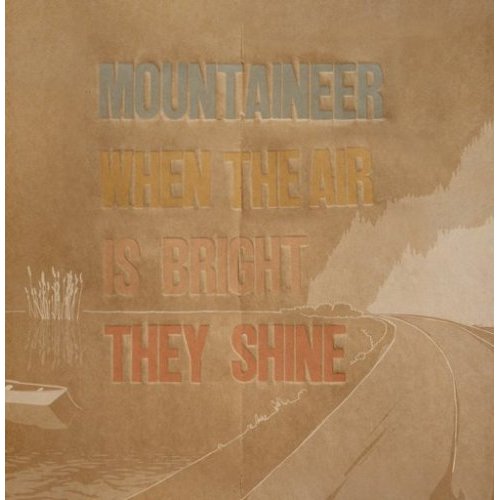
Mountaineer - When the Air is Bright They Shine


If you're scripting a film that opens with strong serif credits over high p.o.v. shots of a wispy blonde on a Vespa winding along a polluted-but-pretty Middle European river, then Hamburg songwriter Henning Wandhoff is the man to write the music. As Mountaineer his third album is a sunshine smile that doesn't quite touch the sadness around the eyes. Over samba shuffles and light wah-pedaled guitar, Wandhoff's warm speak-singing smoothes the wrinkles in the boy/girl trysts gone not quite right. The tear-in-my-Pernod songs are rendered with the same light on dark style as Cohen's "Chelsea Hotel" or VU's "Femme Fatale." The sound hooks up the 60s and 70s poptastic jazziness with hints of modern microprocessing... like watching La Dolce Vita on your video iPod. It's an easy album to get into if you like doing crosswords in cafés while smoking American cigarettes, watching the clouds cover the sun then move on. It's a hard album to dislike otherwise.

(Type Recordings)